
The Geography Factor
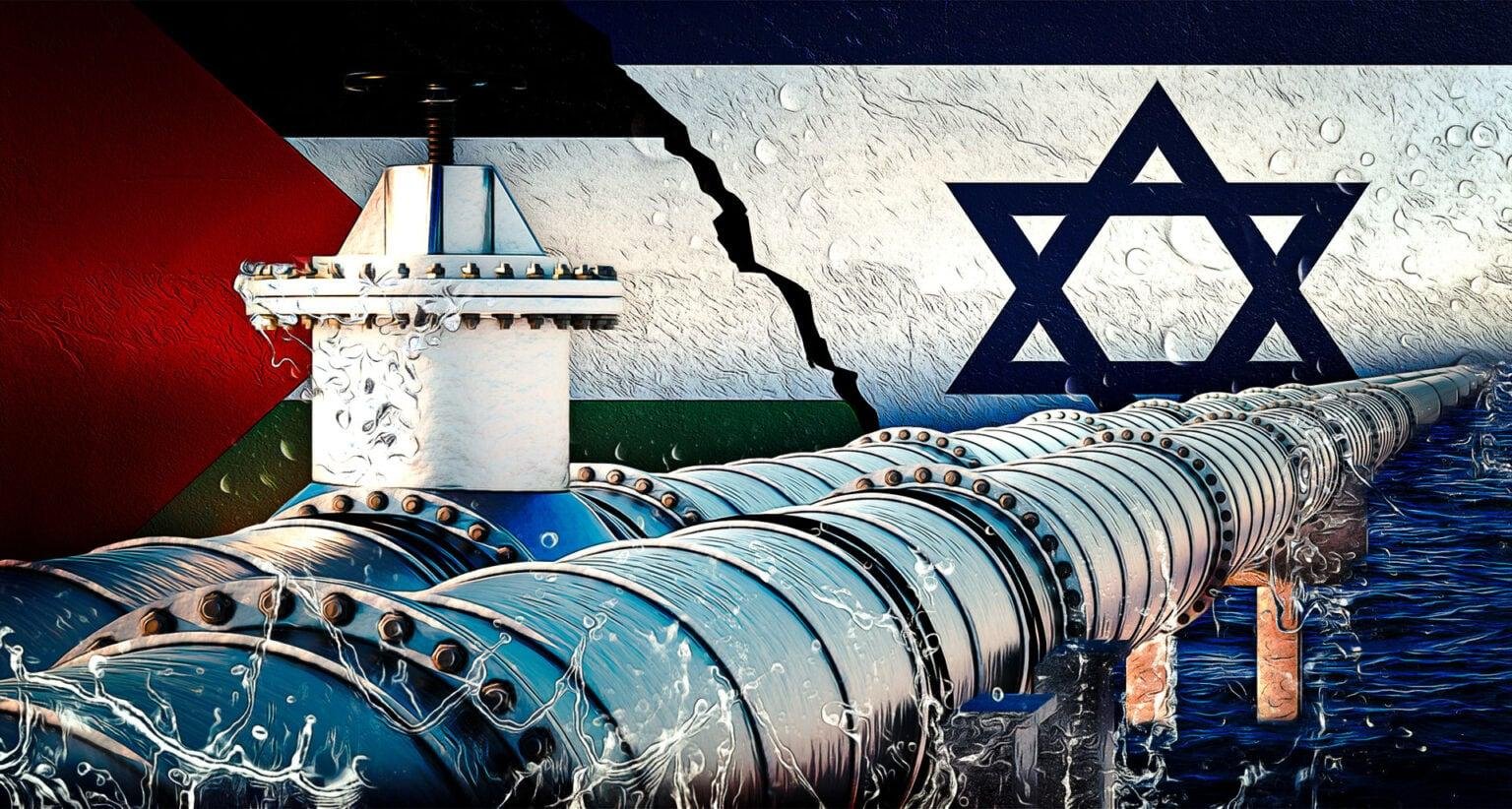
Geopolitical developments in the Middle East are subject to a range of political, diplomatic and economic factors. The geography of this constantly turbulent region necessitates that states adapt their national strategies accordingly. A prime example of such applications can be found in the decades-long conflict between Israel and Palestine. It involves the use of water resources, whose vital role is exploited in accordance with the interests of both sides.
The aquifers that form the boundary between Israel and Palestine are the Mountain Aquifer, the Coastal Aquifer and the Jordan River basin. Overall, its geographical extent is bounded to the north by the fertile valleys of Yezre'el and Beit She'an, to the south by Beer Sheva, to the west by the western foothills extending to the Mediterranean coastal plain, and to the east by the Jordan River rift valley.
The Coastal Aquifer is located along the easternmost coast of the Mediterranean, from the northern part of Sinai Peninsula to Israel, including the Gaza Strip. Its annual water supply to the Gaza Strip is estimated at between 60 and 65 million m3. As for the Jordan River basin, it is concentrated primarily in Jordan and Israel, with 40% and 37% respectively, followed by Syria with 10%, the West Bank with 9%, and Lebanon with 4%, covering a total area estimated at 18.500 km².
Political Developments and Infrastructure Projects up to 1967
On May 14, 1948, the State of Israel was officially established, and in a period of just under one year (May 11, 1949), it had been recognized by 54 states, securing strong diplomatic ties, and, consequently, a solid position within the international community.
From the very first days of its existence, the nascent state was faced with obstacles that seemed insurmountable. The conflict with the Palestinians triggered a wave of refugees, the majority of whom fled to the Gaza Strip, tripling its population, from 80,000 to 240,000-280,000, and foreshadowing challenges for the utilization of the Coastal Aquifer.
Over the course of the next two decades, Israel sought to resolve the issue of its water supply, which was jeopardizing its security. By the end of the 1940s, Mekorot, the National Water Company of Israel, had carried out successful drilling operations that secured the necessary water for drinking and agricultural needs, built a waterworks in the desert, in the southern part of the country, contributing to the establishment and development of 11 settlements. In addition, it connected Jerusalem to the national water supply system.
The turning points during this period were the Jordan Valley Unified Water Plan, or the so-called Johnston Plan (1953-55) and the construction of the National Water Carrier (1964).
The Johnston Plan was an initiative implemented under the auspices of the U.S. ambassador to Israel, Eric Johnston, at the behest of U.S. President Dwight D. Eisenhower, to avert conflict between the Arab riparians and Israel, by establishing the institutional framework for the use and allocation of water from the river basin.
The technical committees accepted the agreement, whereas the states involved would implement it only de facto, complying with the agreed-upon quotas until 1967.
The National Water Carrier, initially planned to provide the Negev desert with irrigation water, connected the Sea of Galilee with the main water system of Israel. This was Israel’s response, aimed at ensuring the sustainability of its central and southern regions by drawing on water reserves concentrated in the north of the country, where the climate is characterized by sufficient rainfall.
Related projects had been implemented through Mekorot since the previous decade. To this end, the project - which began to be planned in 1950’s - was based on the construction of a network of large pumping stations, aqueducts, reservoirs and tunnels.
In 1964 the pumping of the Sea of Galilee commenced. The Arab riparians, during the War Over Water (1964-7), sought to thwart its operation, in a series of events that ultimately led to the outbreak of the Six-Day War.
Regulating Water Issues through Military Orders
Until 1967, the exploitation of water resources was not part of the Israel-Palestinian conflict, but it laid the groundwork for Israel’s political strategy, which was further solidified by the outcome of the Six-Day War.
The water issue was a key factor in the outbreak of that war, at the end of which Israel annexed the strategically valuable areas of the Gaza Strip, the West Bank, the Golan Heights, and the Sinai Peninsula.
Military Order No. 92, which was issued on August 15, two months after the end of the war, delegated authority over the management of water resources to the military commander whom Israel had appointed to the West Bank.
On November 19, Military Order No. 158, known as “Order Amending the Water Control Act,” was also issued, stipulating that water supply facilities were prohibited without a written permit. In the event of a violation of the order, the completed project would be subject to confiscation.
According to one statistical indicator, the percentage of Palestinian household who had access to water via water infrastructure was 10%.
On New Year’s Day 1969, Military Order No. 291, referred to as "The Order Concerning the settlement of Titles and the Regulation of Water," came into effect repealing the relevant acts that had been ratified prior to 1967.
On March 1, 1972, Military Order No. 457, referred to as “The Order Concerning the Regulation of Natural Resources Affairs,” came into force. This order established a competent authority tasked with allocating land and water resources, along with the obligation to assess the extent of damage that would result from its work.
The Origins of Management Challenges and the Impact on Water Quality
In the early 1970s, the Palestinians in the Gaza Strip, whose population numbered 600,000, had no access to adequate water for either domestic or commercial use, in the primary and secondary sectors.
The Coastal Aquifer is naturally susceptible to contamination and is exposed to a number of potential sources of pollution. With the water characterized by a brackish taste and a murky appearance – a condition that gradually worsened and persists to this day – the 1970s marked the onset of the problem due to overpumping of the aquifer, as a result of population growth and shifts in consumption patterns.
This is due to improper management that allowed the seawater to influx and caused the upwelling of saline groundwater. The essence of the groundwater problem was the elevated concentration chloride concentration in its composition.
The associated overpumping of the Mountain Aquifer had already begun in the mid-1960s.
In 1970, the settlement of Kfar Darom was established; it was historically the first of the settlements that comprise the current Gush Katif region. It required significant amounts of water to attain the agricultural production objectives that had been set.
During the same decade, Mekorot’s strategy focused on the management and treating wastewater from the largest metropolitan area in central Israel, inaugurating the largest facility of its kind in the Middle East.
The United Nations Intervention
The United Nations incorporated this issue into its agenda, adopting resolutions during three General Assemblies: in 1972 (3005 {XXVII}), in 1974 (3336 {XXIX}), and 1977 (32/161), seeking to make explicit the Palestinians’ and Arabs’ right to utilize their natural resources.
The UN’s next relevant action occurred in 1982 with Resolution 37/135, affirming that the Palestinian and Arab peoples under Israeli control had the inalienable right to benefit from their natural and other resources and wealth, while independently conducting their economic affairs.
The following year, the Palestinians would secure a particularly significant diplomatic victory through Resolution 38/144, which condemned Israel for its own exploitation of the natural resources of the occupied territories, even including Jerusalem itself.
It clarified the Palestinians’ right to claim restitution and full compensation, arising from the exploitation, depletion, damage or loss of those resources.
Taking the above as established principles, the UN exerted pressure on Israel throughout the decade.
The Transfer of Water Infrastructure to Mekorot
In the 1980s, Mekorot continued to develop its expertise, launching a wastewater recycling plant in northern Israel to ease restrictions on water use for agricultural purposes, without neglecting to nurture agricultural activity in the arid south through wastewater treatment in central Israel, thereby steadily enhancing the country’s sustainability.
Furthermore, the provision of water to the fledgling Israeli settlements was a non-negotiable priority, and Mekorot undertook to carry out projects – such as drilling wells – to cover basic needs.
Over the years, the Palestinians have officially lodged complaints that the Israeli settlements were drawing water at the expense of their own survival needs.
It appears, nevertheless, that from the early days of such settlements, as exemplified by the cases in the West Bank, the Israeli Civil Administration not only endeavored to attach them to their state’s Natonal Water Carrier but simultaneously connected Palestinian communities to it.
Recognition of the company’s precious contribution to advancing Israeli interests had already been sealed as early as 1982 when the Israeli Military Governorate transferred the entirety of water infrastructure of the West Bank to Mekorot, in exchange for the symbolic sum of one ₪ (shekel).
The Legal Status of the Palestinians
In 1987, the Palestinians were recognized by UN Security Council Resolution 605 as a people, a term that is not explicitly defined under International Law.
From a legal standpoint, they occupied an anomalous legal position within the international community, characterized by restricted legal capacity and limited locus standi, lacking the status of full subjects of international law.
While UN Resolution 67/19 (2012) later upgraded Palestine to the status of a Non-Member Observer State, thereby expanding its locus standi before international tribunals, including the International Criminal Court, their sovereign legal capacity remains structurally constrained under ongoing Israeli control.
The Madrid Conference, the Oslo Accords, and the Quartet on the Middle East
This development, however, was significant in the context of the conflict. At the start of the First Intifada, it was already apparent that the water supply network required a range of repairs, particularly rehabilitation of the wells, while maintaining service quality necessitated the replacement of supply mains and distribution lines.
In 1991, with the joint support of the United States and the Soviet Union, a peace conference was held in Madrid to set a renewed basis for negotiations on the issue of Israel and the surrounding three Arab states, as well as Palestine.
The Madrid Conference was the first in which water was brought up as one of the thematic issues in the multilateral negotiations concerning this highly fragile region.
Two years later, direct negotiations between Israel and Palestine took place for the first time in Oslo. They concluded on August 20, and on September 13, the agreement between the two sides was signed in Washington D.C., with President Bill Clinton serving as host.
Annex III, stipulated the formation of an Israeli-Palestinian Committee, which among other obligations, committed to cooperating in the field of water.
This led to the founding of the Palestinian Water Authority in 1994, whilst Israeli Prime Minister Yitzhak Rabin, PLO Chairman Yasser Arafat, and Israeli Foreign Minister Shimon Peres were honored as the laureates of that year’s Nobel Peace Prize.
Even more concrete and pivotal progress was achieved in 1995 with the Interim Agreement on the West Bank and the Gaza Strip, also known as Oslo II or the Taba Agreement, in reference to the city of Taba in Egypt, where it was signed.
The relevant details analyzed in Article 40.
The implementation of these commitments was entrusted to a permanent Joint Water Committee, operating under the aegis of the Joint Civil Affairs Coordination and Cooperation Committee.
The agreement enshrined the Palestinian’s rights in the West Bank; they recognized and assumed the responsibility to generate more water for a wide variety of uses.
The West Bank was divided in areas A, B, and C. They agreed to the joint management of resources, such as water supply and sewage systems in the defined aspects, thus effectively handing over relevant responsibilities to the Palestinians.
It was agreed that during the interim period, the Palestinians would obtain 28.6 million m3/year.
In the event of one side purchasing water from the other, the purchaser was obliged to pay overall actual cost incurred by the supplier, plus the cost of production at the source and conveying to the delivery point.
There were no corresponding arrangements for the Gaza Strip, where the existing agreements and regulations between the parties would remain in effect.
In light of the outcome, the agreement did not serve as a prelude to a final and comprehensive peace agreement in the coming years, with a watershed moment in 2002-3.
Then, the Quartet on the Middle East attempted to resolve the matter, abandoning the Oslo Accords and proposing the establishment of a Palestinian state, amid the cataclysmic friction caused by the second Intifada.
Developments at the turn of the 21st Century
The dawn of the 21st century foreshadowed that the conflict was not expected to subside.
From 1996 to 2002, Palestine received $500 million in aid from donor countries to bolster its capacity to address water issues.
The allocation of these funds appears to have been ineffective up until 2007, in the field of wastewater management, despite the signing of a related Memorandum of Understanding in 2003, with the root cause of the impediment being attributed to the poor level of experience and expertise, combined with inadequate capital, on the Palestinian side.
In 2005, Israel – which was already in the process of withdrawing from the Gaza Strip - handed over to the Palestinians 25 wells, storage reservoirs and a well-developed water distribution system. The only exceptions were certain Israeli settlements, notably the Gush Katif.
Until 2006, chloride levels in the Coastal Aquifer remained high; as regards Israel and its utilization of the West Bank, it is noteworthy that, compared to 1967, per capita consumption decreased from 1,411 m3 to 1,211, lessening its dependence and demonstrating the success of its policy.
Israel, contrary to Palestine, laid the foundations to reinforce its water security even further. In response to the structural water scarcity it faced, acted decisively.
The aim was to meet the demand for potable water by desalinating seawater.
Meanwhile, the discovery of gas reserves in the offshore area could provide the power needs of the desalination plants it was developing.
As of 2017, it had five mega desalination plant in operation, employing seawater reverse osmosis (SWRO). Four of these were the outcome of public-private partnership.
These efforts have enabled the country to cover 85% of its domestic water needs and 40% of its overall needs.
To date, it has been investing in the expansion of its existed plants, along with research and innovation to maximize potential yield improvements.
International Organizations’ alerts and the Red Sea-Dead Sea Water Conveyance Agreement in the aftermath of the Blockade of the Gaza Strip
In 2007, Hamas captured the Gaza Strip, prompting Israel to impose a total blockade.
The prolonged lack of access has impacted Gaza’s economy, further degrading the quality of water (fishing waters were crucial for food security) and sanitation.
The precarious situation in Gaza has mobilized international organizations to take action.
In 2009, the World Bank released its “Assessment of Restrictions on Palestinian Water Sector Development,” pointing out that Palestinian progress toward sustainability in water and sanitation in the West Bank and Gaza is consistently hindered.
In 2012, the UN has published a disturbing forecast report, warning of the risk that the humanitarian crisis could worsen due to the growing Palestinian population and collapsing infrastructure, including water systems.
The timeline extended through 2020, the year by which, if no preventive measures were enacted, the situation would become irreversible.
In 2013, Red Sea–Dead Sea Water Conveyance was signed, which fell under the previous year’s MoU, with Israel guaranteeing the supply of 22 million m3 of water from the West Bank and 10 million from the Gaza Strip.
It was likewise agreed that Israel would sell desalinated water to Palestine.
The decision was criticized on the grounds that it created an undue dependency relationship.
The agreement was abandoned in 2021.
The Turning Point of 2023: A Catalyst for the Collapse of Bilateral Relations
By October 7, 2023, and the military operation carried out by Hamas and other militant groups during the Jewish holiday of Simchat Torah, there had been two major developments.
Firstly, the partial restoration of the JWC in 2017 in order to upgrade the water infrastructure and supply.
Secondly, funded by the European Union and UNICEF, between 2021 and 2023, the expansion of Southern Gaza Seawater Desalination Plant was completed.
In 2023, Israel seeking to retaliate for the attack it had suffered, targeted water supplies in the West Bank and the Gaza Strip, contaminating or destroying wells, pumps, and irrigation systems.
Moreover, similar to what has happened in certain instances in the past, Mekorot proceeded, when deemed necessary, to cut off the water supply as a pressure tactic against Palestinian towns, such as it did in the town of Idna in the southern West Bank in August 2025.
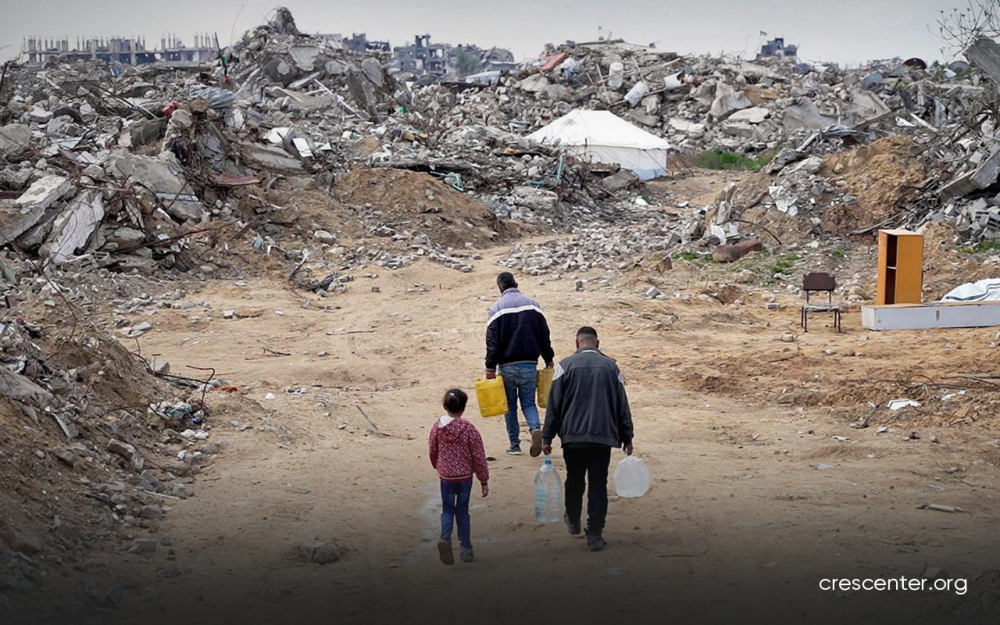
Thus, by 2025, most of the water infrastructure and supply system had been destroyed, like the majority of wastewater treatment plants, triggering a severe water crisis.
Conclusions
Historical patterns indicate that water can serve as a highly efficacious control mechanism, underscoring the value of a meticulous strategy for managing natural resources.
Israel perceives water as yet another measure for safeguarding its national security.
The Palestinians, lacking statehood, are struggling to exercise their sovereignty and face a threat posed upon their very survival.
In absence of a fair and renewed framework for the water rights of both sides following the end of the crisis and subsequently surpassing the asymmetric power dynamics, water will remain a major pillar of the seemingly endless impasse in the Israeli-Palestinian conflict.
Dimitris Theodorou
Historian and Member of the
Association for International and
European Affairs (ODETH)