
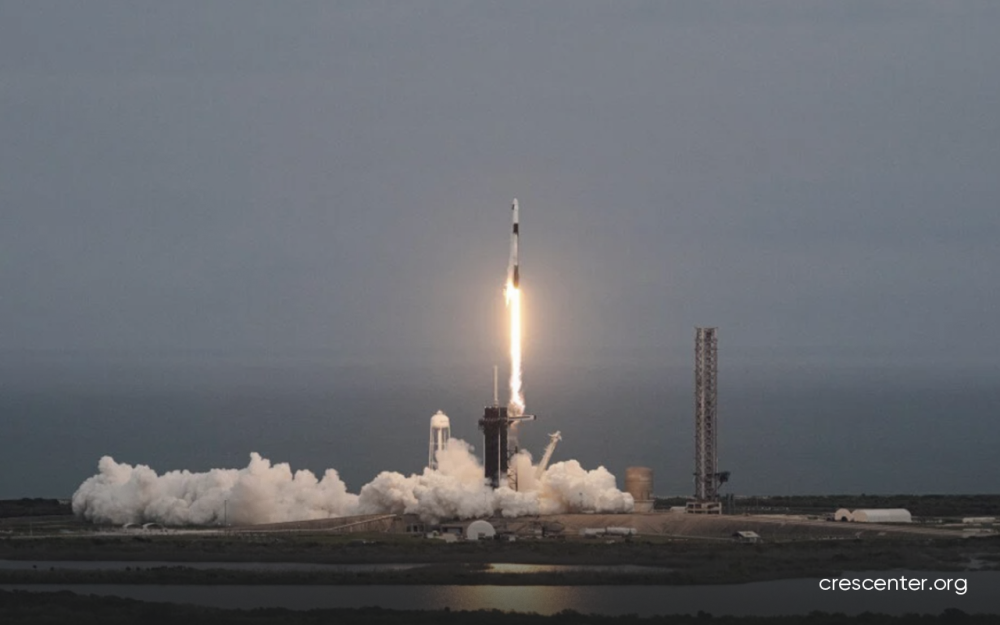
Space is now one of the principal arenas not only for scientific curiosity but also for states’ struggles over sovereignty, technological independence, and the projection of global power. Türkiye’s approach to space policy should be understood within the following framework: having a presence in space requires more than manufacturing satellites; it also requires the ability to launch them into orbit using one’s own capabilities. The spaceport Türkiye has begun building in Somalia is an important part of its effort to reduce this dependency. Although it may initially appear to be an infrastructure investment, the project lies at the heart of a multilayered strategic choice extending from regional power balances to defense.
The Imperative of Geography
Türkiye’s decision to establish a spaceport thousands of kilometers away from its own territory is largely dictated by physics and geography. The Earth’s rotational velocity is greatest at the equator. Rockets launched eastward from this region gain a natural speed advantage. This advantage can reduce fuel requirements or lower launch costs by enabling heavier payloads to be carried by the same rocket. In this respect, Anatolia’s distance from the equator is a disadvantage.
Security is another decisive factor. Türkiye’s surroundings are characterized by densely populated areas, busy air and maritime traffic, and neighboring airspaces, whereas Somalia’s eastern coast faces the open Indian Ocean. With an appropriate trajectory and security planning, rocket stages separating during the initial phases of flight can fall into the ocean, far from civilian settlements, making this coastline a suitable option. However, the ability to benefit from this advantage depends on the launch direction, the target orbit, and the establishment of the necessary safety corridors.
Market Opportunities and Independence
The global space economy has entered a period of rapid growth in recent years and has become one of the strategic sectors expected to expand further in the future. As the number of satellites intended for deployment in low Earth orbit increases, demand for launch services is also rising. Launch capacity, access to suitable orbits, costs, and launch schedules are among the key considerations facing satellite operators. Delays in securing launch opportunities can also affect project costs and timelines.
The facility in Somalia is intended to serve not only Turkish rockets but also the international market through commercial launch, integration, and testing services. Türkiye thus aims to become not merely a user of space but also a provider of space-related services.
According to official statements, the facility is expected to enable launches at lower costs and with greater frequency. However, the scale of this advantage will depend on the rockets used, the target orbits, and commercial demand. Its actual competitiveness can only be assessed once the facility becomes operational and its performance can be evaluated.
The 2027 Milestone
The strategic value of the spaceport will become evident through the domestically developed launch vehicles launched from it. One of the targets announced for late 2027 is to place a 400-kilogram payload into an orbit at an altitude of 550 kilometers using ROKETSAN’s Şimşek-1 rocket. According to information shared by the Ministry of Industry and Technology, the objective is to deploy the HÜRSAT satellite into orbit as part of this effort. However, this target alone does not establish that the rocket will be successfully launched on the specified date or that the launch will necessarily take place from Somalia. Its realization will depend on test results, technical readiness, and the availability of launch infrastructure.
The most prominent project for the same period is the lunar spacecraft. Developed by TÜBİTAK UZAY, the spacecraft weighs approximately 3.5 tons and has a domestic content rate of more than 80 percent. According to a statement by the Turkish Space Agency in September 2026, production and integration have been completed, and the spacecraft has entered the environmental testing phase. The launch is targeted for the first half of 2027. The spacecraft will conduct scientific observations around the Moon and will deliberately impact the lunar surface at the end of its mission. Unlike a soft landing, this is a technology demonstration that does not aim to preserve the spacecraft intact. Furthermore, the fact that the spacecraft will be launched using a foreign rocket illustrates why developing its own launch capability is of strategic importance to Türkiye.
In the field of positioning, a domestically developed rubidium atomic clock was sent into space in July 2026, and its first signal was received. However, testing a single clock in space does not mean that an independent positioning system has been established. Such a system would also require a satellite constellation, ground infrastructure, and user receivers. The critical distinction here is that announced targets, ongoing work, and technologies that have already been completed must not be conflated.
Expectations for Somalia
For many years, Somalia has been associated with terrorism, civil war, and humanitarian crises. A large-scale infrastructure investment can be expected to create jobs in construction, logistics, and technical services, as well as contribute to technology transfer. However, it is still too early to claim that such an investment will, on its own, transform the country’s international image. Lasting benefits will depend on political stability, the quality of local employment, and sustainable economic policies.
From a geopolitical perspective, the facility can be assessed alongside Türkiye’s military training center in Mogadishu and its maritime security cooperation with Somalia. Within this framework, the spaceport stands out as a potential means of expanding the economic, technological, and strategic dimensions of Türkiye’s presence along the Horn of Africa, Red Sea, and Indian Ocean corridor. However, the project’s regional impact will depend not only on its geographical location but also on how it is operated and the extent to which it delivers lasting economic benefits to Somalia.
The New Frontier of Independence
Manufacturing its own satellites is a major achievement for any country. However, remaining dependent on another country’s schedule, authorization, and rockets to place those satellites into orbit represents a significant strategic limitation. At the International Astronautical Congress held in Antalya in October 2026, 1,810 paper abstracts were submitted from Türkiye, of which 674 were accepted. These figures are important indicators of the country’s international scientific visibility. Yet transforming this visibility into lasting technological capacity depends on integrating domestic technologies into operational systems. The number of submitted papers provides an indication of scientific participation, but it does not, by itself, measure a country’s technological capabilities.
The spaceport in Somalia is a test of whether Türkiye can become an actor that not only maintains a presence in space but also provides other countries with access to it. The measure of success will not be the scale of the announced ambitions, but the reliability of the rocket that lifts off from the launch pad.
Buse Nur Karademir-Bachelor of Economics (Inönü University) and independent defense industry & defense economics researcher