

The Middle East has experienced another tense day, and this time, the center of attention was Syria. Yesterday, Israel carried out eight air strikes on the Abu Al-Duhur military airport in Idlib, located in the northern Syria. No injuries were reported following the attack, although the base’s facilities were damaged. These were the first Israeli strikes on the Abu al-Duhur base and the first confirmed Israeli strike on Syrian government assets since March. The attack was immediately condemned by Türkiye, Syria, Iran and the U.S. Tom Barrack, the U.S. Special Envoy for Syria, described this attack as “unnecessary escalation” by Israel. Similarly, the Turkish side strongly condemned the airstrikes, calling them violations of international law and urging stronger international action against Tel-Aviv. On the other hand, Israel accused Damascus of preparing to allow Turkish troops to deploy at the airbase.
The attack inevitably raised questions about why Israel chose to conduct strikes in northern Syria after months of relative silence, particularly amid the ongoing tensions with Tehran.
The transitional government led by Ahmed al-Sharaa, following the overthrow of the twenty-four-year-old Assad regime by Syrian rebel forces, is attempting to rebuild Syria’s state institutions and military. Under al-Sharaa’s leadership, the new government has introduced a range of initiatives to rebuild the country after years of civil war. While working closely with Ankara during this transition period, on the other hand, Damascus has also been trying to demonstrate that it is not a threat to Israel. Nevertheless, Tel-Aviv has viewed the new Syrian government with deep suspicion since Assad was toppled. The Israeli attacks carried out in southern Syria in late 2024, shortly after the fall of Assad, demonstrated a clear stance of Tel-Aviv toward the new government in Damascus. Since then, attacks and tensions have largely been concentrated in the southern parts of Syria, while the North remained relatively untouched. However, this changed with Tuesday’s airstrikes.
The timing of the attack was particularly significant, as it coincided with Syria’s first air exercises since the fall of Assad, using ageing Russian-made MiG-21 jets. The new government in Damascus intends to rebuild the state’s military capabilities through deep cooperation with Ankara. Not surprisingly, the location where the attack took place, as part of the wider Idlib area, has been under the Turkish sphere of influence during the Syrian civil war for years. Through this attack, Israel is drawing red lines around two major issues.
First, Tel-Aviv clearly sees the new government in Syria as a potential threat to its interests. Any significant development of Syria’s military infrastructure could therefore pose a serious challenge to Israel in the future. Similarly, the potential for an increase in Syria’s air capabilities with Turkish assistance could constrain Tel-Aviv’s freedom of operations in Syrian airspace. The latter is particularly vital, considering the regular presence of Israeli air forces over Syria and their role in operations against Iran.
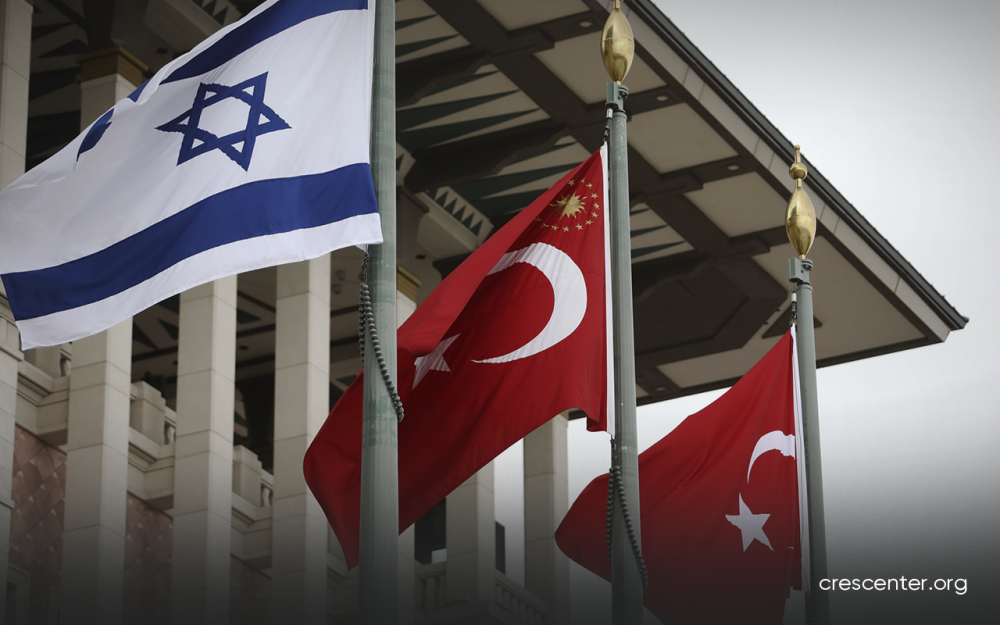
Secondly, there is the issue of Israel-Türkiye rivalry. However, calling it merely a rivalry may no longer be appropriate, especially nowadays, as relations between the two countries have deteriorated to one of their lowest points in decades. Some Israeli officials and analysts have increasingly referred to Ankara as “the new Iran”, while the Turkish leader, Erdoğan, is now being portrayed as an enemy of Israel on election billboards in Tel-Aviv. Claiming that the Turkish side's perception differs from Tel Aviv's would be incorrect. The two sides are increasingly competing across countries and continents, with growing hostility between them, and Syria has emerged as a key focal point of this confrontation. In this broader context, the attack on the base near Idlib can easily be interpreted as a message against both the reconstruction of the Syrian military and Türkiye’s growing military and strategic cooperation with Damascus.
The attack on Tuesday will likely remain unresolved amid conflicting statements from the relevant states and politicians. The more interesting question, however, is whether Israel’s upcoming election could influence the actions taken in the coming weeks. Some U.S. officials have already speculated that the timing of the strike may have been influenced by Israel’s upcoming elections.
The next few weeks, therefore, will be the very crucial in testing the limits of regional actors and their responses to potential Israeli actions. Most importantly, given the frozen and tense relations between Israel and its neighbours, including Türkiye, the escalation of these tensions should not come as a surprise and is increasingly likely to occur.